Living Cities
Scan-and-play spatial multiplayer platform.
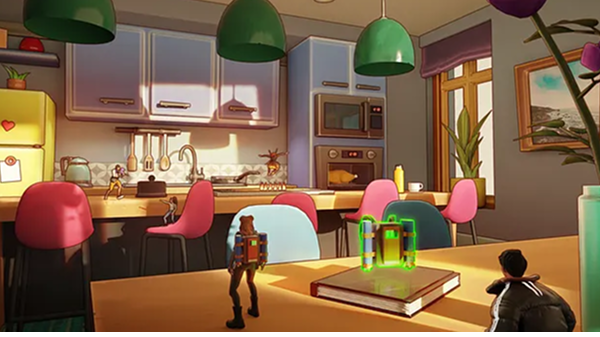
As Director of Product at LivingCities (2021–2023), I led product vision, strategy, and cross-functional execution for a next-generation spatial gaming platform designed to merge the physical world with persistent, social digital spaces. Working across product, design, and engineering, I guided the team through two major product phases — from a location-anchored metaverse to an instant 'scan and play' multiplayer platform.
Phase 1 — Location-Linked Metaverse (Reflektor)
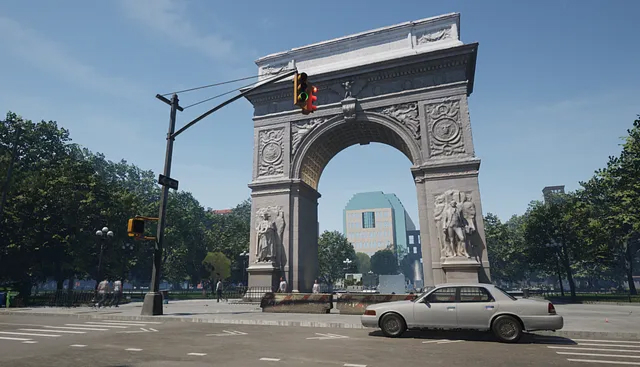
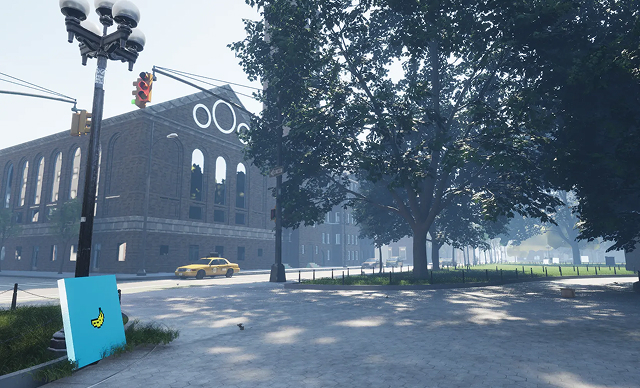
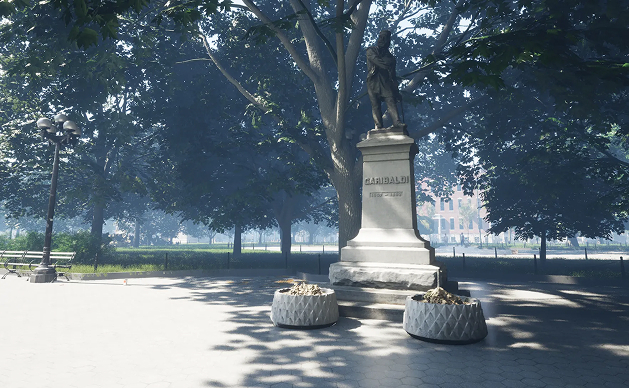
Our initial focus was Reflektor, a shared virtual world precisely mapped to Washington Square Park in New York City. The goal was to allow players anywhere in the world to interact live with users physically present in the park.
Under my product leadership, the team:
- Built a centimeter-accurate digital twin of the park using photogrammetry and custom modeling
- Developed a mobile AR relocalization app enabling on-site users to appear live inside the virtual world
- Implemented dynamic environmental systems including real-world sun tracking and night lighting
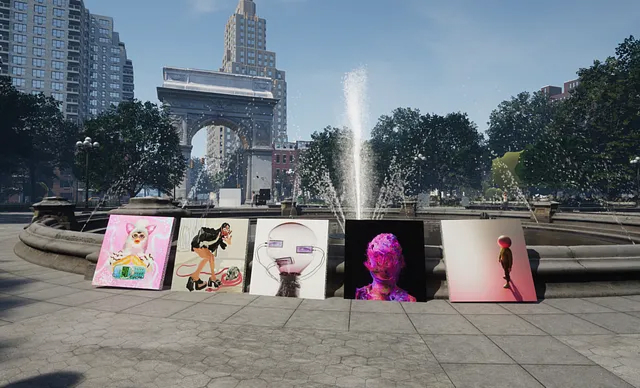
- Shipped early social features such as spatial photo drops and experimental localized livestreaming
- Began prototyping location-based multiplayer games within the virtual park
These efforts proved the technical feasibility and created strong moments of 'magic,' but also revealed a key product challenge: requiring players to travel to a physical location created significant adoption friction.
Strategic Pivot — Instant Scan-and-Play Platform
Recognizing the limitation, I helped drive a major product pivot following the release of Apple's RoomPlan API. We shifted toward a more scalable vision: turning any room into an instant multiplayer game space.
In this phase, I guided the team to:
- Develop a rapid room-scanning pipeline that enabled playable spaces within seconds
- Design asymmetric multiplayer roles between AR-localized players and remote virtual players
- Build a procedural reconstruction system that converted scanned rooms into optimized, destructible game geometry
We created multiple gameplay prototypes (including FPS and floor-is-lava modes), achieved stable multiplayer sessions with 12+ concurrent players, and prototyped early room customization and editing tools. By late development, users could scan a space and immediately play multiplayer games inside it.
Product Principles
- Instant gratification — from scan to multiplayer in seconds
- Play anywhere — any room as a game map
- Procedural scalability — automated, game-ready environments
- Social first — frictionless multiplayer with friends
Impact
Although LivingCities ultimately shut down before public release, the team delivered a validated technical foundation for real-world digital twin gameplay, multiple end-to-end multiplayer prototypes, and novel approaches to AR-anchored asymmetric play. The work demonstrated both the potential and the challenges of merging real-world geometry, AR localization, and social multiplayer into a single consumer platform.
Selected work
Phase 1 — Reflektor
Location-linked metaverse
Our initial focus was Reflektor, a shared virtual world precisely mapped to Washington Square Park in New York City. The goal was to allow players anywhere in the world to interact live with users physically present in the park.
Under my product leadership, the team built a centimeter-accurate digital twin of the park using photogrammetry and custom modeling, developed a mobile AR relocalization app enabling on-site users to appear live inside the virtual world, and implemented dynamic environmental systems including real-world sun tracking and night lighting.
We shipped early social features such as spatial photo drops and experimental localized livestreaming, and began prototyping location-based multiplayer games within the virtual park. These efforts proved the technical feasibility and created strong moments of 'magic,' but also revealed a key product challenge: requiring players to travel to a physical location created significant adoption friction.
Phase 2 — Scan & Play
Any room as a multiplayer arena
Recognizing the limitation, I helped drive a major product pivot following the release of Apple's RoomPlan API. We shifted toward a more scalable vision: turning any room into an instant multiplayer game space.
In this phase, I guided the team to develop a rapid room-scanning pipeline that enabled playable spaces within seconds, design asymmetric multiplayer roles between AR-localized players and remote virtual players, and build a procedural reconstruction system that converted scanned rooms into optimized, destructible game geometry.
We created multiple gameplay prototypes (including FPS and floor-is-lava modes), achieved stable multiplayer sessions with 12+ concurrent players, and prototyped early room customization and editing tools. By late development, users could scan a space and immediately play multiplayer games inside it.
Product Principles
Guiding the platform design
Instant gratification — from scan to multiplayer in seconds
Play anywhere — any room as a game map
Procedural scalability — automated, game-ready environments
Social first — frictionless multiplayer with friends
Impact
Although LivingCities ultimately shut down before public release, the team delivered a validated technical foundation for real-world digital twin gameplay, multiple end-to-end multiplayer prototypes, and novel approaches to AR-anchored asymmetric play. The work demonstrated both the potential and the challenges of merging real-world geometry, AR localization, and social multiplayer into a single consumer platform.